
Ви можете прочитати цю статтю українською мовою тут.
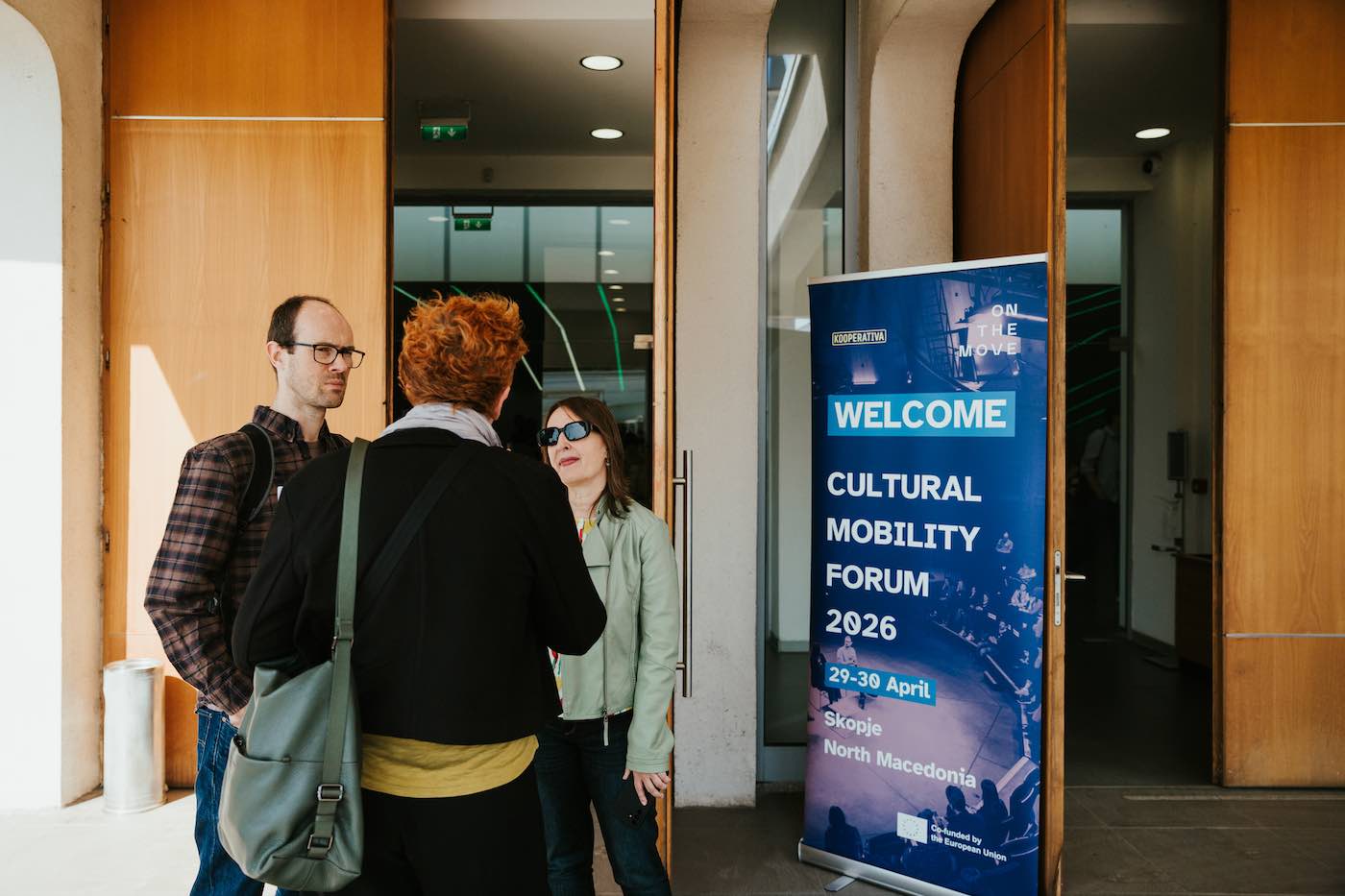
Ukrainian-based writer and curator Kateryna Iakovlenko draws from her experience and creative practice investigating the impact of war as she brings together some of the insight from On the Move’s Cultural Mobility Forum 2026 in Skopje, North Macedonia from 20 to 30 April.
Yes, I have been fortunate. My parents are alive, although they live in a territory occupied by Russia. I have managed to rebuild my home, even though it was unequivocally and completely destroyed as a result of the Russian invasion. In fact, I am fortunate to have survived, despite the fact that, at the time I was evacuating – more precisely, fleeing – the city where I lived was under aerial bombardment. In 2022, I thought I would no longer be able to endure the sound of airplanes and helicopters. But time has passed.
Same year, in May 2022, I had the opportunity to give a lecture in Ljubljana on Ukrainian art. I asked many colleagues about their experience of war, and most of them said they were fortunate, as the war had lasted only four days. For me, the war has been ongoing since 2014. More than ten years of war, more than ten years of being unable to see my native lands, which are currently inaccessible. And that is why, for me – as someone from eastern Ukraine – as well as for those from Crimea, there is an irreconcilable difference between how quickly the war began to be called a war and how many years it took to devise mechanisms to support Ukraine. For me, in 2022, the war had already been going on for eight years; for eight years, I had been waiting for help. During all those years, I had to prove to everyone that this was not a local conflict or some kind of misunderstanding; it was a real war.
Back then, in Ljubljana in 2022, I was struck by something else: the people I spoke with said that they returned home at the first opportunity, because they felt a need to transform and develop their societies, to build democracy and cultural institutions. And I have also been fortunate – I, too, can return to my country, even if not to my own city. I have the possibility to rebuild my home and begin life anew, coexisting with the trauma of loss. I can see acquaintances, participate in cultural life, and be part of it, although it is often not easy – constant shelling, power outages, and much else complicate these processes.
Today, in 2026, I feel that I may not have often thanked the people who were there for me. But perhaps that is also because I rarely asked for help. I was born in a coal-mining region, into a working-class family, and for that reason I understand that only the quality of my work speaks for me.
In 2026, I am also happy; happy to be a woman. Had I been born a man, I would hardly have been able to attend the On the Move Cultural Mobility Forum 2026, which took place this year in Skopje. As a person liable for military service, I would not have been able to obtain permission from the Ukrainian state to travel – just as, on the very first day, it became known that despite fifteen completed documents, several weeks of work, and the money spent on accommodation and tickets, the Ukrainian curator and critic, co-curator of the National Pavilion of Ukraine at the 2022 Venice Biennale, Borys Filonenko, would not be able to attend this year’s event in Venice, having been denied permission due to new regulatory rules.
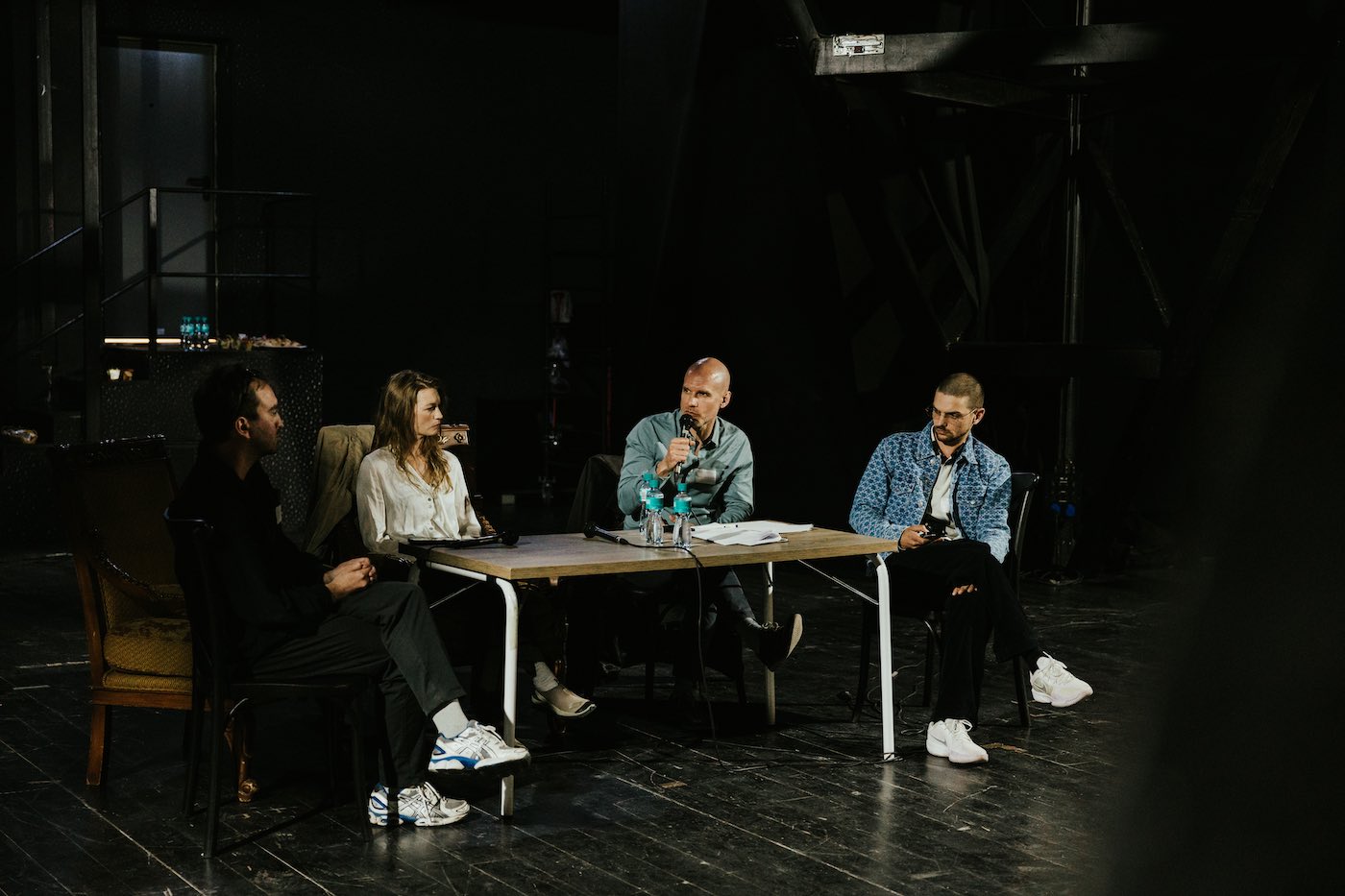
This year’s On the Move Cultural Mobility Forum 2026 focused on mobility and justice and generated an extraordinary number of important insights. I will share only a few of them. This text is based on the outcomes of several conversations, including Safe Havens: Artist Residencies in Turbulent Times, as well as private discussions with Theresa Ridder (SWAN Emergency Residencies), Maik Müller (Martin Roth-Initiative), and Abdullah Al-Kafri (Ettijahat).
What Are Emergency Residencies? The Experience of Theresa Ridder
I remember the first day of the invasion very clearly. I was at home in Irpin. When I woke up, I realised I would not be able to leave the city – I did not have a car, and in fact I could not get out on foot. So, after drinking my morning coffee, I decided that I would stay, no matter what. That same day, all the bridges were blown up, making escape even more difficult.
That day, Theresa Ridder was also drinking her morning coffee. As she recalls, upon learning about the invasion, she and her partner could not settle their thoughts and so they went for a walk. Later, over coffee, the idea for an Emergency Residency emerged. Theresa Ridder is an artist. In such cases, I always ask why an artist chooses to share their space with others, because it is genuinely inspiring. She says the decision came naturally, as they had already been hosting people at that time. The idea soon began to grow, and through conversations with other residencies, a community of those willing to help took shape. At the beginning, she brought together more than twenty organisations that wanted to offer support; something unprecedented. They spoke with one another daily in order to understand what such an initiative could look like.
Ridder insists that Emergency Residencies differ significantly from what we understand as conventional residencies. She describes them as a response to situations in which artists and cultural workers are forced to urgently leave their countries due to war, persecution, or threats to their safety. These residencies were not conceived as long-term programmes with clearly defined research or production goals; rather, they function as instruments of immediate support, creating conditions in which a person can regain a basic sense of stability.
Ridder notes that the launch of such residencies took place under conditions of limited time for preparation and decision-making. Many processes had to be organised in parallel: finding accommodation, providing legal support, securing funding, and communicating with participants, who were often in unstable or dangerous situations. She emphasises that, as a result, standard procedures for selection and planning were significantly altered or simplified. At the same time, she stresses that Emergency Residencies do not follow a single fixed model. According to her, each case required an individual approach, depending on the circumstances of a particular person. This applied both to the duration of the stay and to the format of support.
In some cases, a residency functioned as a short-term refuge; in others, it enabled a more sustained integration into a new professional context. She underlines that this variability became one of the programme’s defining characteristics
I ask Theresa whether they had to address questions related, for instance, to people with disabilities. She says there were no such cases, although there were women with children. The reason I ask this question specifically is simple: a large percentage of people with disabilities live with invisible disabilities. For example, in 2022, I underwent eye surgery that I had long postponed, because I was thinking about the possibility that, in the event of evacuation or having to live in a forest, I would not be able to access the lenses I needed or treat related conditions. The fear of not being able to take care of myself made me more decisive. I have experience working with artists with disabilities, writing about their work, and I know that these are often things that remain unspoken. But I had to ask.
Reflecting on the experience of these ‘rapid-response’ residencies, I find myself thinking about their exclusivity and inclusivity and about the place of sustainability within their structure. It seems that problems – and critiques – often emerge when we consider what comes after such residencies: are institutions with longer-term planning horizons, typically oriented towards production or professional development, prepared to become more open to those affected by war? Are they willing to look beyond those already nearby, and instead seek out voices shaped by more complex and precarious circumstances?
Hospitality and Care
A film that has had a great impact on me it Black Girl (1966), written and directed by the Senegalese filmmaker Ousmane Sembène. It was his directorial debut. The film is based on a short story from Sembène’s 1962 collection Voltaïque, itself inspired by a real story. It is a ‘classic film’ that has been unjustly left outside the cinematic canon. It tells the story of how a wealthy French family ‘invites’ a Senegalese woman, Diouana, into their home because, unlike others, she ‘does not aggressively demand work.’ She ultimately becomes their domestic worker. They forbid her from dressing as she wishes, control every aspect of her life, and drive her to suicide.
This is a deeply layered conversation, one that must be situated within broader historical frameworks, but I want to focus on a detail: the Madame who invited the woman into her home and offered her work had her own assumptions about what help should look like, and about who Diouana should be. Madame claimed to be hospitable, yet in reality she merely exploited the labour of a young woman.
Hospitality is indeed a challenge, because it requires labour; often invisible labour. Genuine hospitality is not only about sincerity; it is about care and the ability to listen without imposing.
In relation to hospitality, Theresa Ridder emphasises that in the context of Emergency Residencies, this concept extends beyond a symbolic or institutional gesture. According to her, it involves concrete practices of support that go beyond providing accommodation or financial assistance, by encompassing daily interaction with participants. She notes that in many cases, organisers assumed roles that exceeded their professional functions. Often, this involved basic matters: orientation in a new city, access to healthcare, assistance with documents, or psychological support. Ridder points out that these aspects were not always anticipated at the outset but became evident through working with individuals.
At the same time, she stresses that this form of care requires significant resources and time from organisations. It created an additional burden for teams that were not always prepared for such demands. She also notes that the boundary between professional and personal interaction often became blurred, raising questions about how long and to what extent such a level of engagement could be sustained. Despite these challenges, these practices of hospitality became defining for the participants’ experiences. In many cases, what mattered was not only access to resources, but also the feeling that someone cared for them at a specific moment in time.
One of the key issues we discussed was mental health and psychological support – crucial, in fact, for both sides, since not only those directly affected by war require care. The ability to recognise when someone needs help is itself an important skill and necessity, one that Swedish hosts, in particular, have learned to cultivate.
Ridder also reflects on her own experience as a host: she is now friends with and collaborates with a Ukrainian artist (they recently created a joint work, which they presented at an exhibition in Cairo). She adds that the broader impact of such experiences on Swedish society is difficult to measure, as it constitutes a form of cultural exchange that undoubtedly expands horizons – not only in relation to art, but beyond.
Migrant or Guest? What Happens After Residencies
A crucial question concerns the status of the person who enters an Emergency Residency: are they an artist who will return home, temporarily sheltered in safety, or is this experience the first step towards migration?
The Ukrainian experience in this regard is far from uniform, and I distinguish between displacement and refugeehood. For example, a friend of mine from the Donetsk region sought asylum in the Czech Republic in 2015 – at the time, her hometown of Marinka, Donetsk Oblast was under constant shelling; today, it no longer exists on the map. Then, in the ninth month of her pregnancy, she decided to leave Ukraine and gave birth in a refugee camp. Her daughter is now fully integrated into Czech society, and their family has obtained Czech citizenship. It takes a long time. The experience of those who left after 2022 is different: most have been granted temporary protection. Some cultural professionals were already abroad at that time, but the overwhelming majority have retained Ukrainian citizenship.
There are countless stories that reflect different experiences of migration, refuge, and displacement. Only some of them are represented through visual images in art and cinema, yet can they fully convey the weight of such a life trajectory, marked by uncertainty and pain?
Residencies do not eliminate this pain; rather, they provide a space in which one can, at least briefly, pause and look at one’s own life.
Theresa Ridder notes that Emergency Residencies were not designed with a clearly defined ‘after,’ and this creates a tension between temporariness and the need for longer-term stability. Participants arrive under urgent circumstances, but over time the question of their future status emerges: is this a short pause, or the beginning of a more extended migration? She emphasises that such programmes do not always have the tools to support this transition.
Maik Müller describes a similar situation within the framework of the Martin Roth-Initiative, noting that a residency often becomes just one stage in a longer process of displacement. After the programme ends, participants must independently navigate their next steps – whether by finding other programmes, securing employment, or establishing legal grounds to remain in the host country. He underlines that institutions are not always able to ensure continuity of support, as many of these questions fall within legal and legislative frameworks that vary from country to country.
Abdullah Al-Kafri draws attention to the fact that participants do not always identify themselves as ‘guests.’ The experience of forced displacement and refuge reshapes this framework: temporary presence can quickly turn into a more stable yet deeply uncertain condition, marked by ongoing concerns about everyday survival and one’s future. This uncertainty affects not only personal well-being but also the ability to sustain professional practice. It is, in many ways, a condition shared by migrants across the world. The possibility of living a dignified life can, at times, feel out of reach.
Bureaucracy and Visas
In 2006, the Ukrainian artist Mykola Ridnyi created the performance Lie Down and Wait, prompted by the fact that waiting for visas – even for artists, or perhaps especially for artists – was an extraordinarily difficult and exhausting process. The visa-free regime between Ukraine and the European Union has been in place only since 11 June 2017; before that, Ukrainians had to navigate an array of bureaucratic procedures, both conceivable and inconceivable. Visa liberalisation itself did not come easily; it might not have happened at all had the pro-Russian president Viktor Yanukovych remained in power. It was the Revolution of Dignity and the overthrow of his regime that accelerated the country’s movement towards European integration. This was already the third year of war, marked by numerous tragedies on the front line.
Theresa Ridder emphasises that bureaucratic procedures remain one of the most challenging aspects of organising Emergency Residencies. Even in situations of urgency, the process of obtaining visas, residence permits, and other documents cannot always be expedited. Organisers are often forced to operate under conditions of uncertainty, as decisions by state institutions may be delayed or subject to sudden change. In her experience, the possibility of establishing such residencies for Ukrainians was linked both to simplified visa procedures and to the rapid response of EU states to Russia’s aggression. At that time, funding became available, and support extended not only to Ukrainians – a small portion was also allocated to dissidents from Russia and Belarus. However, within a few years, this funding was discontinued, making it difficult to imagine similar initiatives today. It is equally difficult to imagine such a swift institutional response for representatives of other contexts – for example, artists from Palestine, who often lack the possibility to obtain visas and leave Gaza.
Maik Müller underscores that the relocation of artists remains one of the most pressing issues. Within the framework of the Martin Roth-Initiative, these questions require a dedicated infrastructure of support. Work with documentation entails ongoing communication with consulates, migration services, and other institutions, and even with experience, the process remains unpredictable.
Bureaucracy affects not only the possibility of departure but also the conditions within which one can stay in host countries. Restrictions tied to visa types or residence permits can determine access to employment, mobility, and social services. Delays or refusals may impact participation in programmes or alter their timelines. All these factors directly shape the conditions under which individuals continue their work during and after a residency.
Residencies for Those Who Cannot Leave
Most of my conversations revolved around residencies in host countries. But do only those who have left require support? Are they the only ones in need?
With the war, my understanding of who requires support has expanded. It now includes, for example, artists who have become soldiers. Military service was not their calling, yet one meaningful way to keep them connected to their field would be to support their artistic practice in different ways. The same applies to veterans, although here a more carefully structured institutional framework is needed, one that includes multiple levels of reintegration and return to the societies to which they belong. Often, those outside the country avoid engaging with military-related realities, explaining that they prefer to support humanitarian needs. But is helping artists recover from states of crisis not also a form of such support?
Maik Müller notes that within the Martin Roth-Initiative it was, until recently, difficult to imagine support outside the framework of relocation. Today, however, the question of how to support those who cannot physically leave their country has emerged as a distinct challenge. Existing residency formats were initially built around mobility, yet in many cases such mobility has become impossible due to security, political, or bureaucratic constraints. He speaks about attempts to adapt these programmes – for instance, through remote formats or by supporting local activities – but emphasises that these solutions cannot fully replace physical presence. A kind of ‘pilot’ project has been a feminist initiative for women artists from Ukraine, part of which took place online. When I asked whether a similar programme could be created for women professionals from Afghanistan, the answer proved far more complex than a simple yes or no, as it depends on many factors, foremost among them security.
Abdullah Al-Kafri describes a similar approach in the work of Ettijahat, emphasising the necessity of supporting those who remain in their countries despite ongoing risks. This requires different organisational approaches, including heightened attention to safety and to the specific contexts in which participants operate. He notes that remote interaction has clear limitations, particularly in terms of access to resources and meaningful participation in professional networks. A collaborative project between artists in the diaspora and those who remained in Syria is only just beginning, making its outcomes difficult to predict. I view this project with hope, while also recognising the potential risks and challenges it may entail.
Similar conversations are unfolding around Ukrainian cultural practitioners – those who have migrated and those who have remained. Often, these discussions begin with difficulty, yet their importance lies precisely in the fact that it doesn’t stop. They develop their own dynamics, sustaining connections between those who left and those who stayed, maintaining the fabric of shared cultural environments.
Müller further emphasises that programmes such as the Martin Roth-Initiative primarily focus on supporting individuals outside their home countries, which raises the question of balance between external and internal forms of support. Institutions operating internationally often have greater capacity to provide resources abroad, but this does not always align with the needs of those who remain. These two dimensions, he suggests, cannot always be reconciled within a single programme. The Initiative works with regional partners, enabling support in contexts where relocation to Germany is not feasible.
Abdullah Al-Kafri underscores the importance of working simultaneously with different groups – both those who have left and those who have stayed. This entails building parallel support structures that take into account differing conditions and constraints. He also points out that the experiences of migrants and those who remain often diverge significantly, shaping their ability to participate in cultural life.
Both interlocutors stress that structural questions extend beyond geography; they are deeply tied to access – to resources, networks, and opportunities for work. External support cannot always compensate for the loss of local context, while support within the country is constrained by other limitations.
During the residency, a recurring question was how to remain gatekeepers while still reaching those who are truly marginalised. I believe this is often a matter of courage – the courage to engage with difficult realities, to go where it seems there is no light. What Abdullah Al-Kafri is doing for the Syrian community is precisely such a model of practice.
Preserving One’s Voice as a Challenge
Abdullah Al-Kafri argues that displacement affects not only the conditions of work, but also the ability to sustain one’s political voice. Being situated in a different context, he notes, can reshape or constrain modes of expression, depending on the conditions in which a person finds themselves. This is not always immediately apparent, but becomes increasingly perceptible over time. There is a risk of gradually losing connection with the context in which that voice was formed, both because of physical distance and the need to adapt to new circumstances. Such adaptation, he suggests, can influence the themes, language, and forms of expression that become possible or acceptable within a given society.
Abdullah Al-Kafri emphasises that this issue has no single solution and depends on individual circumstances. For some, displacement opens new possibilities for expression, for others, it produces a sense of limitation. What matters, in this context, is attentiveness to how conditions of staying shape the capacity to preserve and develop one’s voice.
For me, this is one of the most compelling and urgent questions. I understand that, often in Ukraine, I lack knowledge of other voices. Books, films, and journalism become ways of accessing them. Yet another important issue emerges here – one that Al-Kafri raised in conversation – translation. Translation can be understood both literally and in a broader, almost ontological sense: who has the right to read and interpret a history? Translation matters because some things cannot be rendered word for word while preserving their full meaning. These meanings are often embedded in the very fabric and structure of societies shaped by war.
‘Shared Experience’: Exchange as Mutual Learning
In conversations about migration and justice in wartime, many of the key questions have already been raised by contemporary thinkers. One of them – whose lives are grievable – was articulated by Judith Butler. The answer to this question is constantly reshaped by new experiences; it must be continually rethought.
I often reflect on the phrase ‘shared experience’: who can truly share an experience, and is this even possible? (See for example an artwork of Bosnian Roma artist Selma Selman, You Have No Idea.) What can I share with others? Can I share the resilience so often attributed to Ukrainians? I would like to, but I suspect that this resilience is grounded in many things – fear, uncertainty, and the instability of not knowing what tomorrow will bring. At the same time, I carry a great deal of love – love and gratitude for my country and for those who protect me.
What I can share are practical forms of knowledge: how to begin life from scratch; how to buy a basic set of underwear when all your belongings have burned along with your home; how to maintain a composed face at public events while reading news of deaths; how to carry your home within you when it no longer exists in reality. I can share how to structure a working day when there is no electricity for up to twenty hours, or what essentials one must always carry (hemostatic dressings, a tourniquet, medication). I can explain how to pack an emergency bag. To this list, one could add other forms of knowledge, as described in the work of Pavlo Kovach Jr., whose current role involves notifying families of the dead: how to make ink from ash, how to remove a bloodstain, how to erase a name from stone.
Yet the truth is that our knowledge – and my experience – will collapse when new grief arrives, and people will once again be left to face their circumstances alone, believing they are isolated in the world. Grief isolates. Perhaps loss cannot be shared between two people, and even the attempt to understand it fully may be impossible. But one can begin a conversation, take a first step.
I would like to conclude with something that often remains overlooked, though it was also voiced from the stage. When it comes to supporting refugees and migrants, no one truly knows who stands before them unless a sincere conversation begins. Such conversations matter because they dismantle our stereotypes; not only about displacement, but about nationality, habits, and culture. Ignorance prevents us from recognising and accepting others. The assumption that freedom and democracy are given – and do not require constant care – is equally dangerous. These are conditions that must be protected in order not to be lost.
In several discussions, it was said that people become a resource when other resources are lacking. Yet, living through war, I can say with bitterness: people, too, can be exhausted, people die. And so my central conclusion is this: human life must be preserved. Its value remains one of the highest we have. For who will be here in our place, after us, when we are gone? Us in the sense of cultural workers, artists, writers who tell the stories of others, give the opportunity to speak to those who cannot hear.
Kateryna Iakovlenko is a Ukrainian-based writer and curator who studies the impact of war on art and memory. Having a journalistic and research background in her practice, she transforms archival and documentary materials about the war into exhibitions, non-fiction essays, and librettos that offer new perspectives on understanding the traumatic experiences of war. Among her publications are ‘On the Eve of the Ongoing War, or Those Who Have Seen Death’ (2025) and ‘Donbas as a Metaphor’ (2026). She is a co-curator of the Ukrainian part of the Secondary Archive project. Currently, she is the Cultural Editor-in-chief of UPB Suspilne Media.